Para ver las publicaciones de cada asignatura, pinchar en las etiquetas que aparecen en la derecha del blog

LUNES

MARTES

MIÉRCOLES

JUEVES

VIERNES

LENGUA(nuevo)

MATES (repaso)

INGLÉS(repaso)

SCIENCE(nuevo)

ED.FÍSICA

LENGUA(repaso)

MATES(nuevo)

INGLÉS(nuevo)

SCIENCE(repaso)

MÚSICA

LENGUA(nuevo)

MATES(repaso)

INGLÉS (repaso)

ARTS (nuevo)

RELIGIÓN/

VALORES

LENGUA(repaso)

MATES(nuevo)

INGLÉS (nuevo)

SCIENCE(repaso)

ED.FÍSICA

LENGUA (tareas fin de semana)

MATES (tareas fin de semana)

INGLÉS(repaso)

SCIENCE(nuevo)

RELIGIÓN/

VALORES

martes, 19 de mayo de 2020

ÚLTIMA CÁPSULA DE LA LATINA

 HOLA SUPER HÉROES !
¿Qué tal todo? 
Desde el Equipo de COPIA os traemos la última Cápsula de este curso. Aún nos quedará alguna que otra actividad de evaluación para Junio pero ya no vendrá en formato Cápsula.

La Cápsula Nº6 es un entretenido ROSCO sobre la participación y el Distrito Latina. Aquí os dejamos todas las indicaciones para que podáis pasarlas al alumnado. 


¿Te atreves con nuestro rosco de la Participación del Distrito Latina? Para nuestra Cápsula 6 proponemos una sencilla actividad donde podrás comprobar tus conocimientos sobre el Distrito Latina en general y sobre la Participación en particular. Copia este enlace y realiza nuestro rosco: https://es.educaplay.com/recursos-educativos/5748839-ruleta_de_la_participacion.html 

Con la realización de esta actividad, te invitamos a conseguir nuestro Certificado Virtual de COPIA Latina. Para conseguirlo tienes que seguir los siguientes pasos: 
  1. Realizar el Rosco Participativo
  2. Escribir un comentario divertido en esta entrada de nuestro blog:  https://copiadelatina.blogspot.com/2020/03/capsula-6-rosco-final.html
  3. Enviarnos un email a nuestra cuenta de correo copialatinacomunicacion@gmail.com (Este paso es para poder identificarte y enviarte nuestro Certificado en formato digital)

Son solo tres sencillos pasos. Para cualquier duda puedes escribirnos en nuestros canales habituales, vía email o teléfono.

Y recuerda, lo importante es ¡PARTICIPAR!   

English answers

Hallo, super heroes, these are the answers to the exercises of yesterday:
  • Opera sounds boring. It is not a comparison, we don´t use "like"

  • Beer tastes bitter.  It is not a comparison, we  don´t use "like"
  • My massage feels  relaxing.

  • Fireworks look like giant flowers-- a comparison= fire works similar to flowers: so  we use "like"


  • Gupta heard his dog barking  it is not a comparison, we don´t use "like"


     This soap smells like lemon---- a comparison, we use "like"
  • You look like your sister( comparison).
  • Can you watch my bag for me?
  • The sand feels dry.
  • The scenery  looks beautiful.
  • Cookies taste Delicious.

Social Science review


1. Read the descriptions and write the correct terms. (You can read the book to answer !  )


a) Modern languages which are based on Latin. …..romance languages


b) Process by which people began to adopt Roman customs and culture.....


c) Structures the Romans built to provide their towns and cities with water…..
 
d) Long Roman road which connected Mérida and Astorga.....


e) Emperor of Rome from AD 117 to 138. ( AD =Anno Domini, after Christ, the usual year)...


f) Emperor of Rome from AD 98 to 117- 2 2 2


2.Write the correct adjective form for each of these proper nouns., e-g : Spain - spanish


 a) Rome:
b) Carthage:
c) Ancient Greece:
d) Phoenicia:
e) Lusitania:
f) Iberia:


 3 Write the modern-day names of these places. e.g. Gadir = Cádiz
a) Gadir: 


b) Malaka:

c) Rhode:


d) Empoion:


e) Saguntum:


f) Ebussus:


g) Emerita Augusta:


h) Carthago Nova:


i) Tarraco:


j) Toletum:


k) Olispo: 
 

ENGLISH AND ADAPTED ENGLISH

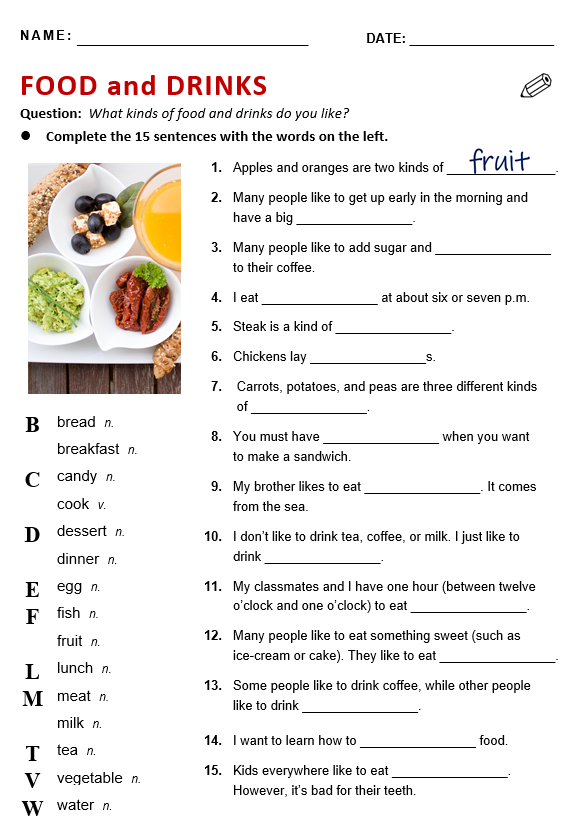
Food and Drinks - All Things TopicsFood Drink ESL Worksheets Activities Games

MÚSICA: TRABAJAMOS LAS NOTAS CON EL TECLADO

JUEGO MUSICAL

Hoy te propongo este juego musical para practicar lectura de notas en el Pentagrama y en el teclado. 

Si tienes un pequeño teclado por casa, puedes practicar con él pero fijándote bien en cómo suenan las notas y dónde se sitúan


TAREA PARA ENVIAR: dibuja un teclado y pon sobre él el nombre de las notas. Intenta dibujar las teclas grandotas para que te sirvan para practicar.

Puedes encontrar donde fijarte, aquí
https://www.unimusica-peru.com/22.jpg


lunes, 18 de mayo de 2020

PHISICAL EDUCATION

https://view.genial.ly/5e7b5c027cbb710d9a552888/interactive-content-harry-potter-oca

SOCIAL SCIENCE


THE IMPORTANCE OF ROMAN  ROADS


Why did the Romans build straight roads?


     They built roads as straight as possible, in order to travel as quickly as they could.


     Winding roads took longer to get to the place you wanted to go and bandits and robbers could be hiding around bends.
The surface of a Roman road was shaped into a camber so that rain water would run off into the ditchesRoman roads were very quick and safe to travel large distances. The Roman soldiers were not the only people to use them. Merchants used them to carry goods all over the Roman Empire.


Resultado de imagen de When were Roman roads built?


The Roman roads were notable for their straightness, solid foundations, cambered surfaces facilitating drainage, and use of concrete made from pozzolana (volcanic ash) and lime.
They were the key to Rome's military might  as the soldiers could move faster. The first major Roman road—the famed Appian Way, or “queen of the roads”—was constructed in 312 B.C. to serve as a supply route between republican Rome and its allies in Capua during the Second Samnite War. From then on, road systems often sprang from Roman conquest.
Almost all of the Roman roads are still in use today. To take this further, almost all the roads EVER built are in use today. They have been paved over where cars need to drive over them, or paved for pedestrians.